Shaping the Future of Money & State Governance: Insights from the GBA Conference
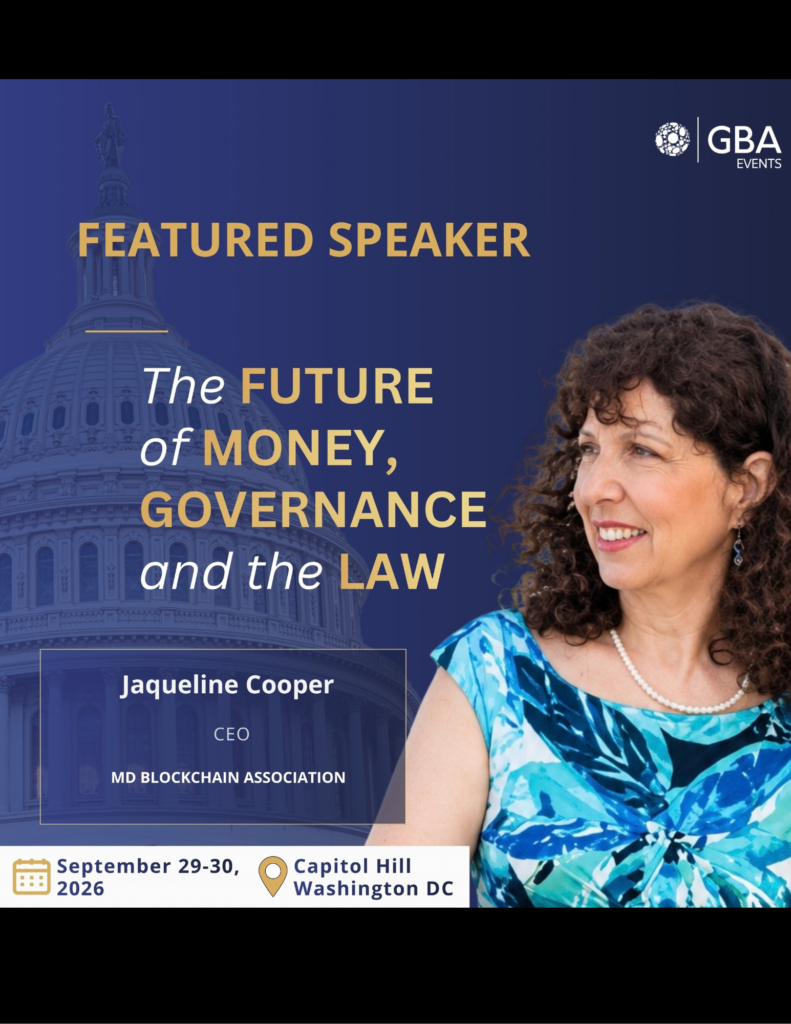
On September 30th, public sector leaders, legal scholars, and technologists convened in Washington, D.C., for the Government Blockchain Association (GBA) conference, The Future of Money, Governance, and the Law.
As decentralized protocols, digital assets, and sovereign financial systems evolve, state governments have become the frontline where statutory theory meets commercial reality. I had the privilege of joining a distinguished panel alongside state policy leaders and innovators from Utah and New Hampshire to address State Policy, Emerging Legislation, and Digital Governance.
The Panel Focus: A Multi-State Perspective on Innovation and Oversight
While federal agencies work through broader jurisdictional baselines, individual states are actively testing, legislating, and deploying the frameworks that govern how citizens, enterprises, and financial institutions interact with digital assets.
Comparing the legislative approaches of Maryland, Utah, and New Hampshire, our panel explored three critical themes:
-
Harmonizing Commercial Law & Property Rights:How proactive state legislatures are creating legal certainty for businesses by adopting modernized commercial standards. We discussed how clear property definitions enable local lenders, banks, and technology firms to custody and collateralize digital assets with enforceable priority.
-
Balancing Competitive Innovation with Consumer Protection:Examining state regulatory sandboxes, decentralized autonomous organization (DAO) legislation, and privacy-forward statutory models—such as those pioneered in Utah and New Hampshire—alongside essential consumer safeguards. The panel highlighted the necessity of defending citizens against predatory schemes, kiosk fraud, and real property deed theft without stifling enterprise growth.
-
Institutional Integration & Depository Infrastructure:What state-chartered commercial banks, trust entities, and credit unions require to participate safely in digital asset custody and payment stablecoin settlement. We examined how state regulatory authorities can foster institutional resilience through third-party risk standards and robust internal governance.
Key Takeaways: The Power of Inter-State Collaboration
State leadership is not a zero-sum competition; it is a collaborative laboratory. By comparing lessons learned across jurisdictions—from Utah’s regulatory sandboxes to New Hampshire’s commercial privacy protections to Maryland’s task force modernizations—policymakers can build cohesive frameworks that avoid jurisdictional friction and protect the public interest.
A sincere thank you to Gerard Dache and the Government Blockchain Association leadership for hosting this essential dialogue, and to my esteemed co-panelists from Utah and New Hampshire for sharing their practical, on-the-ground legislative insights.
To learn more about the summit and ongoing public-sector working groups, visit the GBA Future of Money, Governance, and the Law Overview.
To participate in upcoming legislative working groups, policy roundtables, and continuing education programs, connect with the Maryland Blockchain Association and the Blockchain Legal Institute.